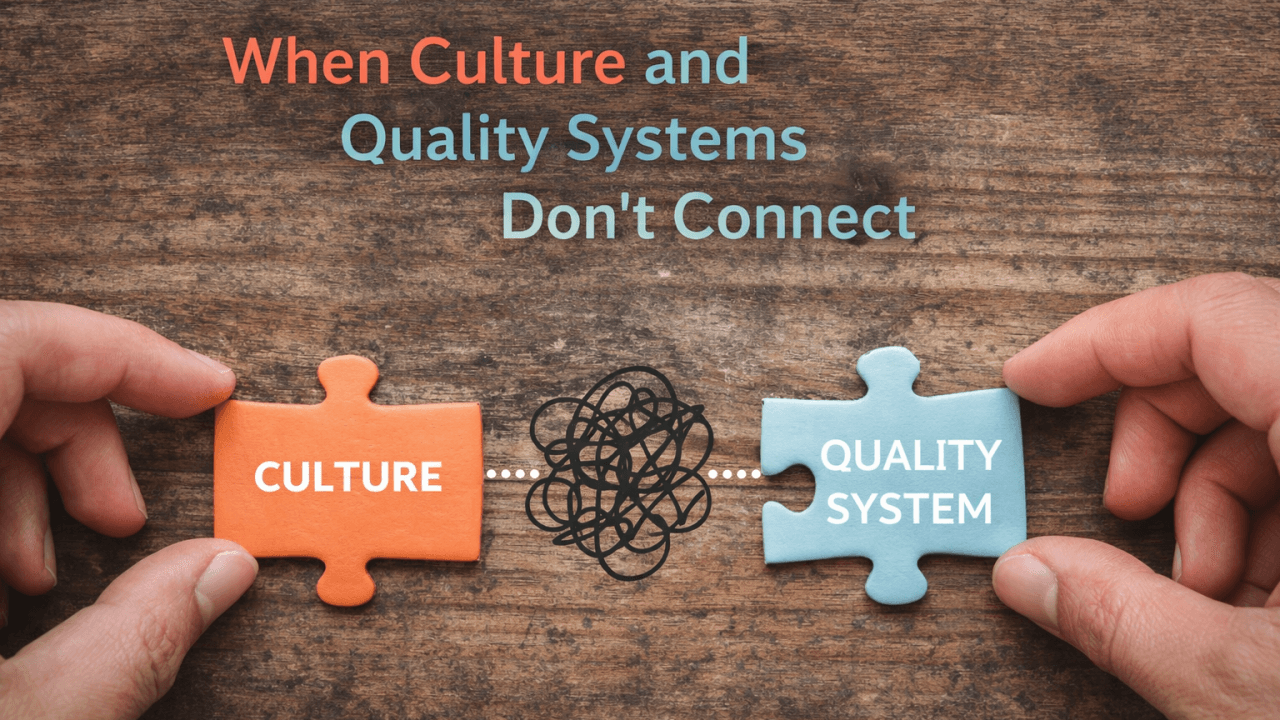
Why Quality Isn’t the Problem - But Keeps Getting the Blame
03/03/2026 by Karolina Zablocka
“Quality slows us down.”
If you’ve ever worked in a regulated environment, you’ve heard this, or thought, at least once.
Usually right before:
- a deadline is missed
- a risk surfaces late
- or Quality asks an uncomfortable question
Quality gets blamed not because it’s unnecessary, but because it’s often invited in after the most important decisions are already made.
And when Quality finally speaks up, it doesn’t sound helpful. It sounds disruptive.
Quality Doesn’t Slow Things Down – It Reveals What Was Rushed
Here’s the uncomfortable truth:
Quality doesn’t slow organisations down. It exposes where they were already moving too fast and without control.
I’ve been in situations where Quality wasn’t part of the early decision-making at all.
The work progressed. Deadlines were agreed. Commitments were made.
And then the product landed on my desk for final approval.
What surfaced at that point wasn’t minor. It was fundamental! Regulatory gaps that should have been addressed much earlier.
Not because people didn’t care. But because Quality had never been invited into the conversation when it mattered most.
When Quality Speaks Up Late, It Always Looks Like the Problem
At that point, there are only two options:
- Ignore the issues and sign anyway
- Or stop, question, and fix what should have been addressed earlier
When Quality chooses the second option, the reaction is predictable:
“Why are you blocking this now?” “This is going to delay everything.” “Quality is being difficult again.”
In those moments, risk gets redefined.
The risk of missing a deadline suddenly feels bigger than the risk of releasing a non-compliant or non-conforming product.
But that creates a false choice.
There Is No Such Thing as Quality Risk vs Business Risk
Regulatory breaches, customer complaints, recalls, rework, and loss of trust are business risks.
They just arrive later – when the cost is higher and the options are fewer.
When organisations prioritise speed over Quality, they’re not reducing risk. They’re postponing it.
Quality didn’t create the risk. Quality made it visible.
And if raising a Quality issue is seen as a business threat, the real threat isn’t Quality – it’s the culture deciding what risk is acceptable.
Quality doesn’t slow organisations down. It asks questions earlier, and culture decides whether those questions are welcome.
Share this article:
Written by
