The Human Side of Quality We Keep Ignoring
09/03/2026 by Karolina Zablocka
Let’s be honest about something we don’t like to admit in Quality.
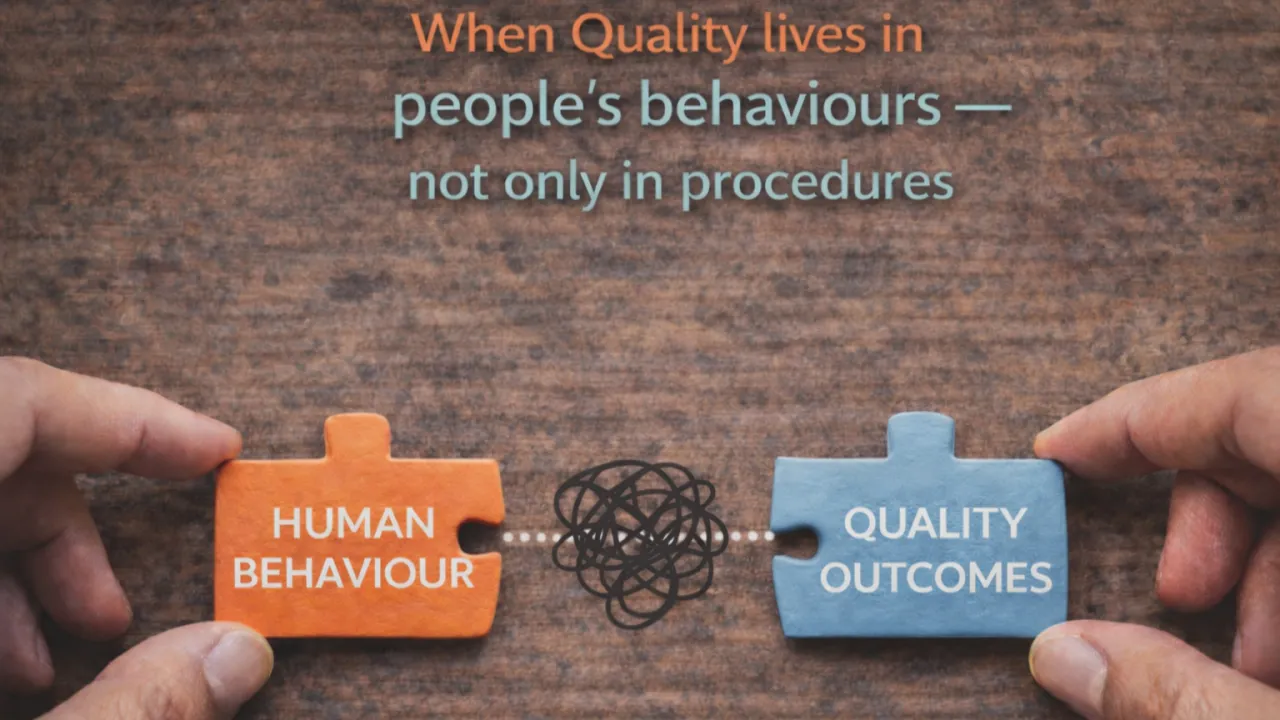
After working in Quality across different organisations, one thing has become very clear to me: most Quality problems are not caused by missing procedures.
They’re caused by human behaviour.
And behaviour is shaped by:
- fear
- trust
- pressure
- leadership response
Yet when something goes wrong, our first reaction is often the same:
“We need another procedure.”
Quality Doesn’t Live in Documents
Quality doesn’t live in manuals, SOPs, or systems.
It lives in:
- how people make decisions under pressure
- how they react when something goes wrong
- what they do when no one is watching
Documents describe what should happen. Behaviour shows what actually happens.
If we want better Quality outcomes, we need to stop pretending paperwork alone can fix human behaviour.
“Why Don’t People Follow Procedures?”
When people don’t follow procedures, it’s tempting to assume they don’t care.
That assumption is usually wrong.
More often, it’s because:
- the procedure doesn’t reflect reality
- it’s hard to access or understand
- following it feels risky when deadlines matter
I once saw a mistake trigger an immediate reaction from Quality: update the procedure, add more steps, require more documentation.
On paper, it looked like improvement. In reality, it slowed the process down and created extra work without preventing anything.
When we later reviewed what had actually happened, the issue wasn’t the process itself. The procedure simply didn’t reflect how the work was really done.
Blame feels easy. Understanding takes effort.
But blaming people for not following a system they had no role in designing will never improve Quality.
Fear Is a Quality Risk – Just Not One We Like to Measure
Fear is one of the most underestimated Quality risks.
Fear of:
- making mistakes
- being blamed
- slowing things down
- asking “stupid” questions
When fear is present, people don’t raise issues early.
I once worked with a team where a small issue was discovered weeks after it had first appeared.
During the investigation, someone quietly admitted they had noticed something unusual earlier but weren’t sure if it was “serious enough” to raise. They didn’t want to slow production or create problems if it turned out to be nothing.
By the time the issue finally surfaced, the impact was much bigger than it needed to be.
The technical issue was small. The silence around it was the real risk.
When fear is present, people wait. They work around problems. They hope nothing goes wrong.
And hope is not a control measure.
No procedure can compensate for a culture where people don’t feel safe to speak up.
Silence Is Not Agreement
Silence in meetings is often misread as alignment.
In reality, it can signal:
- disengagement
- lack of trust
- fear of consequences
If issues only surface during audits, incidents, or customer complaints, that’s not bad luck.
It’s a sign the system discourages honesty long before problems escalate.
Healthy Quality cultures don’t just allow questions – they expect them.
Mistakes Are Information – If You Let Them Be
Mistakes tell us:
- where systems don’t work
- where training is missing
- where pressure overrides process
When mistakes are punished, information disappears.
When mistakes are explored, learning begins.
Organisations that learn fastest are not the ones with fewer mistakes – they’re the ones where people feel safe saying:
“Something went wrong.”
Trust Changes Behaviour More Than Control Ever Will
You can’t force people to care about Quality.
You can only create conditions where they want to.
When people feel trusted:
- they take responsibility
- they raise issues earlier
- they think beyond minimum compliance
When they don’t, Quality becomes something to survive – not something to protect.
Control may produce short-term compliance.
Trust produces sustainable behaviour.
Final Thought
Quality is not just technical.
It’s emotional.
It’s shaped by how people feel when:
- they’re audited
- they report an issue
- something goes wrong
If Quality is associated with fear or blame, behaviour will reflect that.
If it’s associated with support and learning, behaviour will too.
The strongest Quality systems fail without trust.
And the strongest cultures make Quality feel almost effortless.
If people don’t feel safe to speak, Quality problems don’t disappear – they just stay hidden longer…
Share this article:
Written by
